Delhi Garment Wholesale Market Guide Trends Suppliers Best Markets and Sustainable Sourcing
Delhi rewards buyers who arrive prepared. The city’s garment trade moves quickly, margins can be tight, and the best stock often goes to people who know where to look, what to ask, and when to walk away.
For boutique owners, online sellers, export traders, uniform suppliers, and resellers, the Delhi garment wholesale market offers almost every category of clothing, from everyday basics to occasion wear. The challenge is not finding garments. The challenge is finding the right mix of price, quality, supplier reliability, and repeat availability.
Delhi’s strength comes from its layered ecosystem. Traders, job workers, fabric dealers, embroiderers, printers, packers, transporters, and small manufacturers all work within reach of each other. That makes the city flexible. It also means buyers need a clear sourcing plan before stepping into its busiest markets.

Delhi’s garment industry is changing fast
Delhi has always been a trading city, but its garment industry is no longer only about low-cost volume. Several trends now shape what wholesalers sell and how buyers source.
Faster fashion cycles are changing buying habits
Retailers once bought large seasonal lots and waited for them to sell. That model still exists, especially for uniforms, basics, and wedding wear. Yet many small retailers now prefer smaller, more frequent orders.
This shift comes from online selling, quick-changing customer tastes, and the risk of dead stock. A kurti print, co-ord set, or cargo trouser style may sell sharply for a few weeks, then slow down. Buyers are asking suppliers for:
Smaller minimum order quantities
Faster repeat production
Mixed-size bundles
More colour options
Ready-to-ship stock
This favours suppliers who can react quickly rather than those who only deal in heavy bulk.
Ethnic wear remains strong, but styling is lighter
Delhi remains a major sourcing point for kurtis, salwar suits, lehengas, dupattas, saree blouses, and festive sets. The difference is in the styling. Heavy embellishment still sells for weddings, but everyday ethnic wear has shifted towards lighter fabrics, softer colours, block prints, minimal embroidery, and fusion cuts.
Indo-western clothing is also a steady category. Longline kurtas with trousers, tunic tops, jacket sets, kaftans, and printed co-ords give retailers a broad price range to work with.
Comfortwear and casualwear are now core categories
The growth of home-based work, online retail, and value-led fashion has made casual categories more important. T-shirts, joggers, leggings, nightwear, oversized shirts, denim, cargos, and knitted co-ords are now regular wholesale purchases, not just side categories.
For buyers, this means checking fabric recovery, stitching strength, shrinkage, colour fastness, and fit consistency. Casualwear looks easy to source, but weak quality shows quickly after washing.
Online and offline sourcing now work together
Many Delhi wholesalers now share catalogues through messaging apps and ship repeat orders after an in-person first purchase. This is useful, but it should not replace physical inspection at the start.
A sensible pattern is to visit the market, inspect samples, test the supplier’s communication, place a small order, then build towards regular remote buying. Trust still starts with touch, fit, finishing, and timely delivery.
The most popular garments available for wholesale in Delhi
Delhi’s wholesale garment trade covers almost every segment, but some categories have especially strong demand across the year.
Garment category | Common wholesale demand | What to check before buying |
Kurtis and kurta sets | Boutiques, online stores, regional retailers | Fabric feel, print quality, size grading, stitching at side seams |
T-shirts and casual tops | Resellers, college wear shops, e-commerce sellers | GSM, neck rib, colour bleeding, print durability |
Denim and trousers | Streetwear stores, value fashion retailers | Fit consistency, zipper quality, pocket stitching, wash finish |
Co-ord sets | Fashion boutiques, Instagram-led sellers | Pattern matching, fabric fall, trend relevance |
Sarees and blouses | Occasion wear shops, festive retailers | Border finish, blouse piece quality, embroidery neatness |
Kidswear | Local retailers, school-area shops, online sellers | Softness, safety of trims, seams, wash performance |
Nightwear and loungewear | Year-round resellers, family wear stores | Elastic quality, fabric shrinkage, stitching comfort |
Winterwear | Seasonal retailers, north Indian markets | Warmth, pilling, zipper strength, lining quality |
Seasonal favourites matter
Delhi’s buying calendar is strongly seasonal. Summer stock usually leans towards cotton kurtis, rayon dresses, light shirts, shorts, kidswear, and breathable nightwear. Monsoon can increase demand for quick-dry casual clothing, darker colours, and practical footwear-adjacent fashion accessories.
The festive and wedding season brings demand for lehengas, embroidered suits, sarees, partywear gowns, sherwanis, jackets, and embellished dupattas. Winter shifts attention to sweatshirts, hoodies, tracksuits, woollen kurtis, coats, jackets, shawls, and thermals.
A good buying plan separates evergreen basics from trend-led stock. Basics can be bought deeper if quality is proven. Trend items should be tested in smaller lots before placing larger orders.

The best areas for wholesale garment shopping in Delhi
Each Delhi market has its own character. Some are better for bulk basics, some for fabrics, some for surplus fashion, and some for occasion wear. The right area depends on the product category, order size, and customer profile.
Gandhi Nagar works well for volume garments
Gandhi Nagar in East Delhi is one of the best-known wholesale garment hubs in North India. It is especially relevant for readymade garments, kidswear, shirts, trousers, denim, ethnic wear, and budget fashion.
This market suits buyers who want volume, variety, and price comparisons across many shops. It can feel overwhelming, so arrive with a category list and target price range. Many shops specialise narrowly, which helps if sourcing is focused.
Best for:
Readymade garments
Kidswear
Casualwear
Shirts and trousers
Budget ethnic wear
Bulk buying
Chandni Chowk is strong for wedding and festive sourcing
Chandni Chowk remains a key destination for festive and occasion wear. Buyers often visit for sarees, lehengas, embroidered fabrics, dupattas, laces, trims, and bridal-related clothing.
The area is dense and time-consuming, but it rewards careful browsing. It is especially useful for boutique owners who want embellished pieces, fabric inspiration, or festive collections with strong visual appeal.
Best for:
Sarees
Lehengas
Embroidered suits
Bridal fabrics
Dupattas and trims
Occasion wear materials
Lajpat Nagar suits boutiques and semi-wholesale buying
Lajpat Nagar is known for retail, but parts of the market and nearby suppliers can work for boutique sourcing, fabric buying, and semi-wholesale purchases. It is useful for buyers who want trend-led ethnic and fusion wear rather than only low-cost bulk.
It can also help new sellers study what urban customers are choosing, because the retail mix shows colours, cuts, and styling trends in real time.
Best for:
Boutique ethnic wear
Fabrics
Dupattas
Trend checks
Small batch sourcing
Karol Bagh and Tank Road are useful for denim and menswear
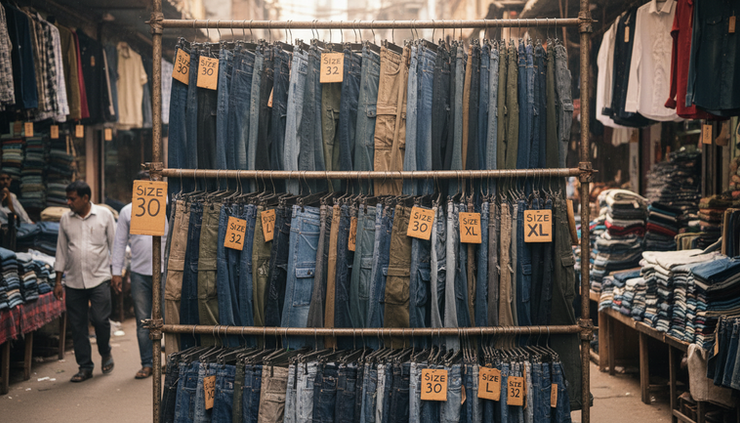
Karol Bagh has a broad garment trade, while Tank Road is widely associated with denim and casualwear. Buyers looking for jeans, jackets, cargos, shirts, and menswear basics often include this area in their sourcing route.
Fit matters more than it appears in denim. Always check size consistency across waist measurements, length, rise, and wash finish before placing a larger order.
Best for:
Denim
Trousers
Menswear casuals
Jackets
Cargos
Streetwear-inspired stock
Sarojini Nagar can help with surplus and trend spotting
Sarojini Nagar is famous for bargain retail and export surplus-style shopping. It is not the same as a structured wholesale hub, but it can be useful for small sellers, stylists, and boutique owners looking at fast-moving trends, surplus finds, and customer preferences.
Because stock can be inconsistent, treat it as a discovery market rather than a dependable wholesale base.
Best for:
Trend research
Surplus-style garments
Small quantity fashion finds
Visual merchandising ideas
How to find reliable suppliers and negotiate well
A low price means little if the supplier misses delivery, changes fabric quality, or cannot repeat a best-selling style. Reliable sourcing needs a process.
Start with a clear buying brief
Before visiting a supplier, define the basics:
Product category
Fabric type
Target customer
Size range
Colour range
Quantity
Target landed cost
Packaging needs
Delivery timeline
This keeps conversations focused. It also signals that the buyer is serious.
Inspect samples carefully
Check more than the front look of the garment. Turn it inside out. Look at seams, hems, buttons, zips, elastics, lining, labels, and finishing. For printed garments, rub a hidden area lightly with a damp white cloth if the supplier allows it. For stretch garments, check recovery after pulling.
For repeat orders, keep one approved sample as a reference. Mark it with date, supplier name, fabric detail, size, and agreed price. This reduces disputes later.
Place a trial order before scaling
A small first order is often the best test. It shows how the supplier handles packing, timing, billing, communication, and quality consistency.
If the first lot sells well, increase quantity gradually. Many sourcing problems happen when buyers jump from sample approval to large bulk orders without testing the supplier’s process.
Negotiate beyond the unit price
Strong negotiation is not only about pushing the lowest rate. Better terms can protect margins without damaging the supplier relationship.
Negotiate on:
Mixed colours within one style
Size ratio flexibility
Replacement for damaged pieces
Repeat order pricing
Packing quality
Dispatch schedule
Payment terms after trust develops
Be direct but respectful. Delhi market sellers are used to bargaining, but serious buyers stand out by knowing product value. If a quoted price seems high, ask what changes the rate: fabric, lining, embroidery, stitching, quantity, or finishing. That conversation often reveals where costs can be adjusted.
Avoid common sourcing mistakes
Many new buyers fall into the same traps. They buy only on appearance, ignore size consistency, miss hidden stitching issues, or choose a supplier who has no clear repeat stock system.
Watch for warning signs:
The supplier refuses basic inspection
Prices change sharply without reason
Fabric details are vague
Delivery promises are unrealistic
Samples and bulk pieces look different
Damaged goods policy is unclear
A reliable supplier does not need to be the cheapest. Reliability often saves more money than a small discount.
Quality and sustainability now affect profit
Quality control used to be seen as a back-end concern. Now it affects reviews, return rates, repeat orders, and brand trust. For fashion businesses, quality is a selling tool.
Build a simple quality checklist
A practical checklist should cover:
Fabric feel and weight
Shrinkage risk
Colour fastness
Stitch density
Seam strength
Size accuracy
Trim quality
Finishing threads
Packaging condition
For online sellers, size accuracy is especially important. Poor measurements lead to returns even when the garment looks good.
Ask better sustainability questions
Sustainability in garment sourcing does not always mean expensive certified collections. It can start with better choices and better questions.
Ask suppliers about:
Fabric composition
Use of deadstock or surplus fabric
Dyeing and washing processes
Packaging material
Waste handling
Repeatability of fabric
Worker safety practices where relevant
Not every small supplier will have formal certification. Still, clear questions help separate thoughtful producers from careless ones.
Choose materials with the customer in mind
Cotton, linen blends, viscose, rayon, denim, fleece, polyester blends, and recycled fabrics all have a place. The better choice depends on the garment’s purpose, price point, climate, and customer expectation.
For summer ethnic wear, breathability may matter more than heavy decoration. For winterwear, warmth and pilling resistance matter. For kidswear, softness and safe trims are crucial. For everyday basics, wash performance can decide whether customers return.
Reduce waste through smarter buying
Overbuying trend items creates waste and locks up cash. A more sustainable approach also tends to be commercially safer:
Test trend-led products in smaller quantities
Repeat proven styles instead of guessing heavily
Choose colours that match local demand
Avoid fragile embellishments for everyday wear
Repair or discount minor defects transparently
Use better packaging only where it protects the garment
Sustainability and profit do not need to compete. In many cases, careful buying supports both.

A practical sourcing plan for Delhi
A successful Delhi sourcing trip works best with structure. Spend the first round studying markets and comparing suppliers, not rushing into heavy purchases. Shortlist shops by category, inspect samples, record prices, and take clear notes.
A simple two-day plan can work well:
Time | Focus | Aim |
Day one morning | Visit a category-heavy market such as Gandhi Nagar or Tank Road | Compare prices, quality levels, size ranges, and supplier behaviour |
Day one afternoon | Shortlist suppliers and buy samples or small lots | Test product quality and communication |
Day two morning | Visit a specialist market such as Chandni Chowk or Lajpat Nagar | Source festive, boutique, or fabric-led products |
Day two afternoon | Confirm trial orders and delivery terms | Fix quantities, packing, replacement terms, and payment details |
Keep records for every supplier. Note the shop name, lane, product type, quoted price, minimum quantity, fabric detail, and delivery promise. Photos help, but written notes save confusion once several similar products start blending together.
The best buyers in Delhi are not the ones who bargain the hardest. They are the ones who know their customer, understand construction quality, build dependable supplier relationships, and keep enough flexibility to follow demand.
Delhi offers scale, variety, and speed. Use that strength with discipline. Buy with a plan, test before scaling, respect quality, and treat sustainability as part of long-term sourcing rather than a slogan. That is how a wholesale trip becomes a repeatable fashion business advantage.


Comments